
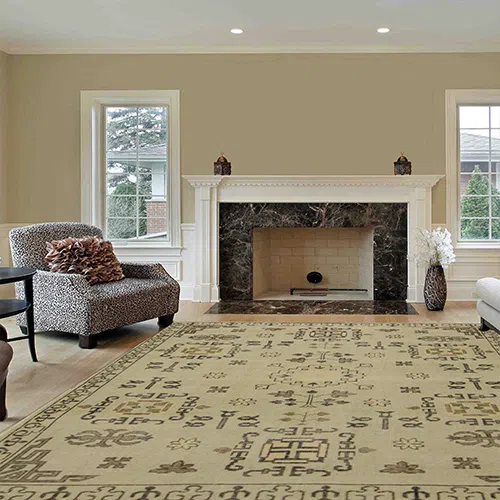
Exploring Khotan Rugs: The Silk Road's Most Unique Textile Tradition
The Crossroads of the Silk Road
Nestled along the ancient trade routes connecting China, Central Asia, and Persia lies the oasis city of Khotan (also known as Hotan). For centuries, this historic hub on the southern edge of the Taklamakan Desert served as a vibrant meeting point for merchants, monks, and master artisans. Out of this cultural crossroad emerged one of the most distinctive textile traditions in the world: the Khotan rug.
Today, authentic Khotan rugs are revered by interior designers and textile collectors alike for their extraordinary ability to bridge Eastern and Western aesthetics into a unified, breathtaking piece of woven art.
What Makes Khotan Rugs Unique?
Unlike traditional Persian or Chinese carpets that strictly adhere to regional design canons, Khotan rugs represent a true artistic synthesis. They effortlessly harmonize Islamic geometric precision with Buddhist and East Asian floral symbolism, resulting in a look that feels both ancient and remarkably modern.
Key Visual Elements and Motifs
- Pomegranate Patterns: Symbolizing abundance, fertility, and prosperity, the pomegranate tree or vase motif is one of the signature designs in Khotan weaving. Stylized branches often reach across the central field in delicate lattice structures.
- Three-Medallion Layouts: Many Khotan carpets feature a classic composition of three circular or hexagonal medallions aligned along the center field, reflecting Central Asian and Turkmen influences.
- Cloud Bands and Sacred Symbols: Subtle Asian design elements—such as cloud bands, lotus blossoms, and fretwork borders—frequently intermingle with Middle Eastern floral vines and geometric repeats.
- Soft, Earthy Color Palettes: Master Khotan weavers utilized natural dyes sourced from regional plants and minerals. Authentic pieces frequently feature warm terracotta, soft saffron, burnished gold, muted teal, and warm ivory tones.
Craftsmanship and Materials
The beauty of a Khotan rug lies not only in its visual composition but also in its texture. Historically woven using fine local wool or lustrous silk on a cotton foundation, Khotan carpets possess a distinctively soft, flexible handle. The weave often utilizes an asymmetrical knotting technique, allowing the carpet to drape comfortably while maintaining durability.
Because these carpets relied on natural dyes, they display a rich abrash—subtle, horizontal variations in color tone that occur as different dye batches were used during the weaving process. This natural shifting of tone gives each rug depth, individuality, and a relaxed, aged charm that machine-made reproductions cannot recreate.
How to Style Khotan Rugs in Contemporary Interiors
Because Khotan rugs balance geometric structure with muted, organic color palettes, they adapt seamlessly to a variety of interior styles:
1. Complementing Organic Modern and Japandi Spaces
The understated warm tones and nature-inspired imagery of a Khotan rug fit effortlessly into Organic Modern or Japandi decor. Pair a warm terracotta or gold Khotan carpet with pale oak furniture, neutral linen upholstery, and stone accents to create a calm, grounded atmosphere.
2. Anchoring Transitional Living Rooms
If your home blends classic architectural features with modern furnishings, a Khotan rug provides the perfect bridge. Its historical craftsmanship adds depth and character, while its uncluttered geometric layouts keep the room feeling light and fresh.
3. Adding Warmth to Dining Areas
The repeating lattice patterns and rich undertones of a Khotan weaving make it an ideal anchor beneath a dining table. The subtle variations in color naturally camouflage light wear while providing an engaging conversational backdrop for family and guests.
Preserving History Underfoot
"An authentic handwoven Khotan rug is far more than a floor covering—it is a living artifact that brings centuries of Silk Road history directly into the modern home."
When investing in a hand-knotted Khotan carpet, caring for its foundation is essential. Always place a high-quality rug pad underneath to cushion the weave and prevent slipping. Vacuum regularly using a suction-only setting, and rotate the rug once or twice a year to ensure even exposure to light and foot traffic.
At Tampa Rug Center, we take pride in curated collections of authentic handwoven rugs from historic weaving centers around the globe. Whether you are seeking a rare antique design or a beautifully preserved tribal weave, our goal is to help you find the perfect floor covering to elevate your home's unique story.