
The Art of Handwoven Rug Restoration: How Professional Repair Protects Your Investment
An authentic handwoven rug is far more than a simple floor covering; it is an enduring piece of functional art. Crafted by skilled weavers using techniques refined over centuries, hand-knotted Oriental, Persian, and Turkish rugs are made from natural fibers like wool, silk, and cotton. While these textiles are designed to withstand decades—and often centuries—of daily life, natural wear is inevitable over time. High foot traffic, heavy furniture, pet activity, and environmental factors can eventually cause frayed edges, thinning pile, or unraveling fringe.
Understanding how professional rug repair and restoration work empowers rug owners to protect their investment. Timely structural maintenance ensures your cherished heirloom retains its aesthetic elegance, physical strength, and historic value for generations to come.
Understanding Handwoven Construction
To appreciate the restoration process, it helps to understand how a handwoven rug is built. Unlike machine-made rugs, which rely on synthetic backings, chemical glues, and latex to bind fibers together, authentic handwoven rugs are held together entirely by structural tension. An artisan erects a vertical foundation of warp threads on a loom, then hand-ties individual yarn knots around those warp strands before securing each row with horizontal weft threads.
Because the pile and edges are tied directly into this woven lattice, damage to one area can compromise surrounding sections. For instance, if the fringe unravels, the structural warp threads are left unsecured, allowing individual knots to slide off the foundation. Prompt attention from restoration specialists stops localized wear from causing widespread pile loss.
Key Signs Your Rug Needs Professional Repair
Recognizing the early warning signs of rug damage allows you to arrange repairs before complex re-weaving becomes necessary. Keep an eye out for these common issues:
- Fringe Deterioration: The fringe is actually the exposed end of the rug's foundational warp threads. When fringes fray, break, or unravel, the rug loses its end finish and knots begin to slip away.
- Selvage Fraying: Selvages are the bound side edges running along the length of the rug. Constant side friction can wear down these wool or silk wrappings, exposing core strands and causing edges to curl or shred.
- Moth Damage and Thinning Pile: Clothes moth larvae feed on natural wool fibers, creating bare patches where only the grid foundation remains.
- Dry Rot: Over-watering potted plants placed on rugs or storing damp textiles in unventilated areas leads to dry rot, which rots the foundation threads and makes the rug brittle.
The Step-by-Step Restoration Process
Restoring fine antique and vintage handwoven rugs requires deep knowledge of regional weaving styles, dye matching, and fiber behavior. Master restorers utilize time-tested handcraft methods to preserve authentic character.
1. Gentle Hand Washing and Flushing
Restoration begins with thorough cleaning. Standard carpet machinery and high-heat steam cleaners can bleed natural vegetable dyes and strip wool of its protective lanolin. Professional restorers perform gentle submersion hand washing with pH-balanced cleansers and flowing water to flush deeply embedded soil and abrasive sand out of the pile prior to structural work.
2. Securing Fringe and Edge Binding
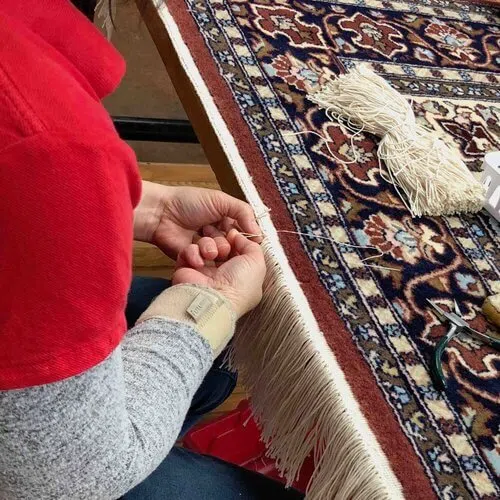
For unraveling side edges, artisans re-bind the selvage by hand-wrapping continuous wool yarns around outer warp bundles, matching the original color and technique. For fringe repair, loose ends are secured with custom overcasting stitches. In cases of severe fringe loss, new warp threads are carefully woven directly into the foundation to rebuild a stable boundary.
3. Re-Knitting and Pile Reconstruction
When addressing holes, tears, or moth-eaten spots, master craftsmen reconstruct the missing foundation warp and weft grid. They then hand-tie matching wool knots following the original design matrix, knot density, and pile height, blending new stitches seamlessly into the surrounding pattern.
Proper rug repair is not merely about cosmetic fix-ups; it is a meticulous preservation process that maintains structural integrity, historical authenticity, and long-term monetary value.
Preventative Care to Extend Your Rug's Life
While expert restoration can revive worn textiles, proactive maintenance minimizes structural strain over time:
- Use a Quality Rug Pad: Placing a high-density, non-slip pad beneath your rug cushions foot impact, stops movement, and shields the bottom foundation from subfloor friction.
- Rotate Regularly: Rotate your rug 180 degrees every one to two years to ensure even distribution of sun exposure and foot traffic.
- Vacuum Safely: Use a suction-only vacuum attachment or sweep gently with a broom. Never run a heavy rotary brush or beater bar directly over delicate fringe or antique wool pile.
At Tampa Rug Center, we celebrate the enduring craftsmanship of authentic handwoven rugs. By combining attentive routine care with professional restoration when needed, you ensure your hand-knotted floor art remains a vibrant, cherished focal point in your home for decades to come.