
The Art of the Flatweave: A Complete Guide to Authentic Kilim Rugs
Understanding the Art of the Flatweave
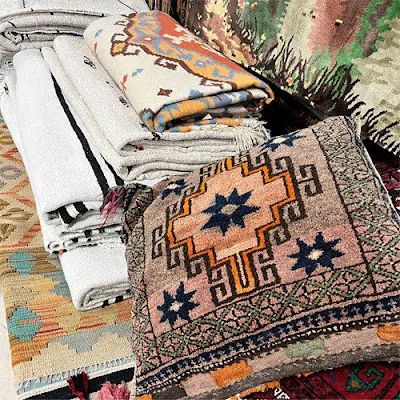
Among the world's most distinctive textile traditions, Kilim rugs hold a cherished position. Unlike hand-knotted pile carpets that feature raised plush wool fibers, Kilims are handwoven using flatweave techniques that produce a sleek, tapestry-like texture. Originating among nomadic and village weavers across Anatolian, Persian, Caucasian, and Central Asian regions, these flatweaves were historically crafted for practical household use—serving as floor coverings, tent dividers, bench covers, and saddle bags.
Today, authentic Kilim rugs are celebrated by interior designers and textile collectors alike for their vibrant geometric patterns, rich historical symbolism, and remarkable versatility. Whether you are seeking to add a layer of rustic warmth to a modern apartment or looking for a durable accent piece for high-traffic areas, understanding the unique qualities of Kilim rugs will help you choose the perfect weave for your home.
How Kilim Rugs Are Woven: The Slit-Weave Technique
To appreciate a Kilim, one must understand how it is constructed. Flatweave rugs are created by tightly interweaving the warp (vertical foundation threads) and weft (horizontal decorative threads). In traditional Kilims, the colored weft strands completely cover the structural warp threads, creating a technique known as weft-faced weaving.
The signature characteristic of many authentic Kilims is the slit-weave method. When a weaver changes colors to build a geometric motif, a small vertical slit is left between adjacent color blocks. These subtle slits create crisp, sharp lines around geometric shapes, giving Kilim designs their signature graphic clarity. Master weavers meticulously construct these patterns entirely from memory, drawing upon generations of cultural knowledge.
Key Benefits of Flatweave Construction
- Reversible Beauty: Because the design is formed by continuous weft threads woven over and under warp threads, many Kilims are identical on both sides, allowing you to flip the rug to extend its lifespan.
- Lightweight and Flexible: Without a heavy pile foundation, Kilims are lightweight, easy to move, and simple to reposition throughout your living spaces.
- Durable for High Traffic: The tight interweaving of dense hand-spun wool yields a tough surface that handles everyday foot traffic remarkably well.
Decoding the Symbolism: Stories Written in Wool
Every handwoven Kilim tells a story. Nomadic artisan weavers encoded their personal hopes, protections, and natural surroundings into the geometric motifs woven directly into the fabric. Learning to read these symbols transforms a floor covering into a rich visual narrative.
blockquote>"A handwoven Kilim is not merely a decorative floor covering; it is a written language of symbols, memory, and heritage preserved in wool."Some of the most iconic symbols found in traditional Kilim weaving include:
- Elibelinde (Hands on Hips): A powerful symbol of motherhood, fertility, and abundance, frequently depicted across Anatolian weaves.
- Ram’s Horn (Kocboynuzu): Representing heroism, power, and masculine strength, characterized by sweeping spiral motifs.
- Running Water (Su Yolu): A geometric zig-zag pattern representing life, cleansing, and gratitude for essential water sources in arid landscapes.
- Evil Eye (Nazar): Intricate diamond or star-shaped motifs woven to ward off negative energy and safeguard the home.
Styling Kilim Rugs in Contemporary Home Decor
One of the greatest virtues of authentic Kilim rugs is their effortless adaptability across diverse design styles. From bohemian and eclectic spaces to sleek mid-century modern and Scandinavian minimalist interiors, flatweaves bring immediate texture and organic warmth.
1. Layering over Natural Fiber Rugs
If you want to introduce pattern to a large living room without overwhelming the space, layer a vibrant vintage Kilim diagonally or centered over a neutral sisal, jute, or flat wool carpet. This technique creates visual depth and anchors your seating arrangement.
2. Brightening High-Traffic Passageways
Because Kilims lack a tall pile that can trap dust or flatten under pressure, flatweave runners are ideal for entryways, hallways, and kitchen work zones. Pair them with a quality non-slip rug pad to protect both the floor and the rug while ensuring safe traction.
3. Wall Hangings and Architectural Displays
Given their tapestry-like structure and light weight, smaller Kilims make exceptional wall art. Mounting a fine flatweave on a decorative wooden or iron rod elevates it from a functional rug to a striking focal point above a fireplace, headboard, or console table.
Essential Care Tips for Your Authentic Kilim
Caring for a handwoven Kilim requires simple, mindful routines. Vacuum regularly using a suction-only setting without a rotating beater bar, which can catch on the flatweave threads. Always place a high-quality non-slip pad underneath your Kilim to prevent sliding, absorb impact, and preserve the structural integrity of the weave. For deep cleaning or stain removal, seek professional rug specialists who understand natural dyes and traditional wool fibers.