
Understanding Anatolian Rugs: History, Symbolism, and Modern Styling
For centuries, the Anatolian peninsula—spanning modern-day Turkey—has been celebrated as one of the world's most vibrant centers of textile artistry. From nomadic tribal weaving camps to imperial Ottoman workshops, Anatolian rugs represent a living tradition of heritage, storytelling, and craftsmanship. At Tampa Rug Center, we appreciate how an authentic handwoven Anatolian rug brings depth, narrative, and unmistakable warmth into contemporary living spaces.
The Deep Historical Roots of Anatolian Weaving
Rug weaving in Anatolia dates back over a millennium, heavily shaped by nomadic Turkic tribes who migrated into Asia Minor during the 11th century. These weavers brought with them portable looms, geometric design traditions, and knotting techniques optimized for wool sheared from their own herds. Over the centuries, these rustic tribal traditions merged with the refined artistic sensibilities of urban centers, culminating in the golden age of Ottoman court carpets during the 16th and 17th centuries.
What sets Anatolian weaving apart is its steadfast reliance on local materials and natural dyes. Traditional weavers harvested madder root for rich reds, indigo for deep blues, pomegranate rinds for warm yellows, and walnut husks for rich earthy browns. This harmonious palette gives genuine Anatolian rugs an organic luster and color depth that synthetic dyes simply cannot replicate.
Decoding Anatolian Symbols and Motifs
Every handwoven Anatolian rug serves as a canvas for personal and cultural expression. Rather than working from rigid industrial blueprints, traditional weavers embedded tribal folklore, personal hopes, and spiritual beliefs directly into their knottings through symbolic motifs.
- Elibelinde (Hands on Hips): One of the oldest and most famous Anatolian motifs, representing motherhood, fertility, and abundance.
- Ram's Horn (Kocboynuzu): Symbolizes physical strength, heroism, and protection against hardship.
- Evil Eye (Nazar): Woven into patterns to ward off ill fortune and negative energy.
- Tree of Life (Hayat Agaci): Represents eternal life, family heritage, and the connection between earth and the heavens.
The Secret Strength: The Turkish Symmetrical Knot
Beyond their artistic beauty, Anatolian rugs are recognized worldwide for their extraordinary structural integrity. Unlike many Persian and East Asian rugs that utilize an asymmetrical single knot, Anatolian rugs are traditionally constructed using the double-knotted Ghiordes knot, also known as the symmetrical Turkish knot.
In this technique, wool yarn is wrapped entirely around two adjacent warp threads before being pulled tight. This creates an exceptionally strong weave that resists unraveling, even after generations of foot traffic. Combined with dense wool piles on wool or cotton foundations, an authentic Anatolian rug is designed to endure while developing a soft, beautiful patina over time.
How to Style Anatolian Rugs in Contemporary Interiors
While rooted in ancient history, Anatolian rugs are remarkably versatile and complement a wide variety of modern interior design aesthetics. Here are several ways to incorporate these handwoven masterpieces into your modern home:
1. Create Warmth in Minimalist and Scandinavian Spaces
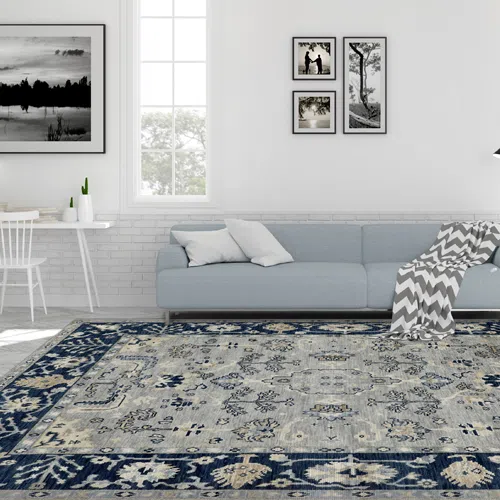
Modern minimalist interiors rely on clean lines and neutral palettes, which can sometimes feel overly cool or sterile. A vintage Anatolian rug—especially one featuring warm terracotta, faded rust, or soft muted tones—adds instant texture, warmth, and visual balance without cluttering the room.
2. Layer Over Neutral Natural Fiber Rugs
For a relaxed, bohemian look, layer a smaller Anatolian accent rug over a larger base rug made of braided jute or sisal. This technique draws the eye directly to the handwoven patterns of the Anatolian piece while framing larger seating areas.
3. Define High-Traffic Gathering Areas
Thanks to the resilience of the double Turkish knot, Anatolian rugs are exceptional choices for busy spaces such as dining rooms, living rooms, and entryways. Their intricate geometric patterns are naturally forgiving of everyday wear while providing soft comfort underfoot.
Preserving Your Handwoven Rug
Caring for an authentic handwoven rug requires simple, consistent attention. Vacuum your rug regularly using a suction-only setting, avoiding rotary beater bars that can snag hand-knotted fringe. Rotate the rug once or twice a year to ensure balanced sun exposure and uniform traffic wear.
An authentic handwoven Anatolian rug is more than a floor covering; it is a piece of living history, woven by hand to carry warmth and story into your home for decades to come.
At Tampa Rug Center, our curated collection features authentic handwoven rugs selected for their artistry, structural quality, and timeless appeal. Explore our collection today to find the perfect piece for your home.